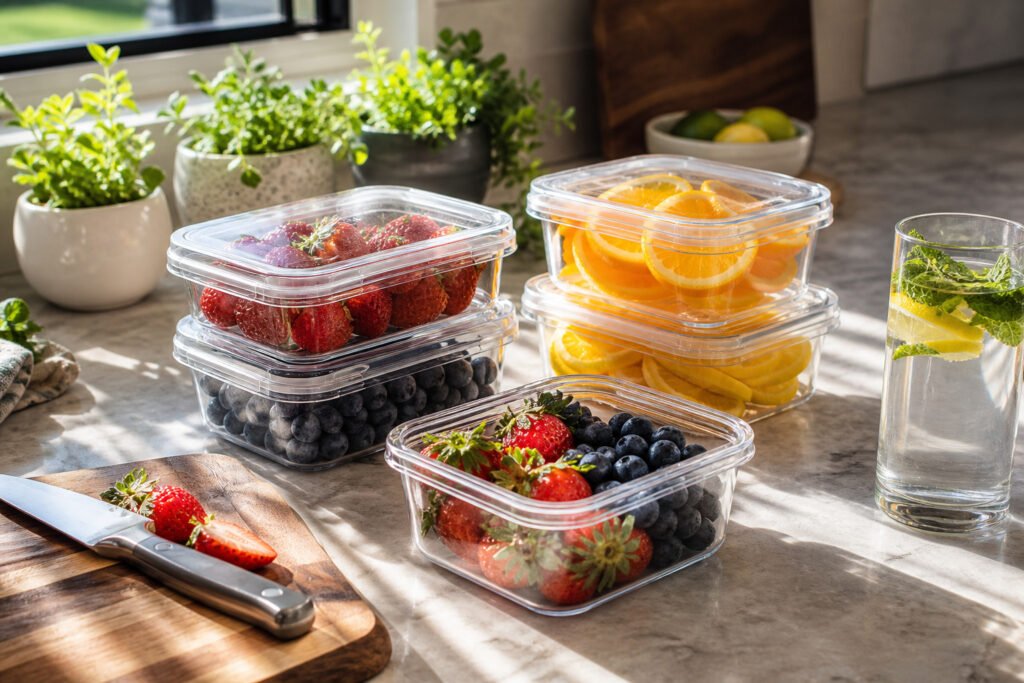
The Rubbermaid Produce Saver Containers win this roundup for one reason: they actually get used. The FreshVent lid moves air instead of trapping ethylene, the plastic survives the dishwasher without clouding, and the 4.6-cup size fits a pint of cherry tomatoes or a head of broccoli without wasted space. That reliability matters more than the OXO GreenSaver’s longer freshness claims if you are the type who loses replacement filters in a junk drawer. If you need berries to last a full two weeks or you run every kitchen item through the dishwasher on heavy cycle, one of the other eight picks below will suit you better.
My Top Picks
| Product | Award | Best for | Why it won | ||
|---|---|---|---|---|---|
 |
Rubbermaid Produce Saver Containers | Best Overall | Buyers wanting balanced performance | Strong mix of quality, airflow, size options, and easy cleanup | Check price |
 |
Rubbermaid FreshWorks | Best for Berries | Berry lovers needing longer freshness | Ventilation system specifically designed to keep berries fresh longer | Check price |
 |
Generic 8 PCS Fruit Storage Containers | Best Budget Option | Shoppers watching their spending | Good capacity and freshness claims without the premium price tag | Check price |
 |
Lendex 4 Pack Fruit Storage Containers | Best Multi-Purpose | Buyers wanting one container for everything | Versatile design handles different produce types equally well | Check price |
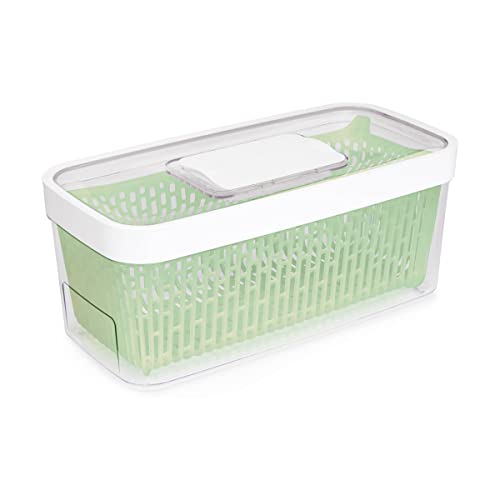 |
OXO Good Grips GreenSaver | Best for Leafy Greens | Salad lovers and green smoothie fans | Purpose-built design extends life of delicate leafy greens | Check price |
 |
damynuo 10 Pack Fruit Storage Containers | Best for Large Quantities | Bulk shoppers and large households | Ten containers handle big harvests or family-size grocery runs | Check price |
 |
Freshmage 5 PCS Large Fruit storage Containers | Best for Variety of Sizes | Buyers with varied storage needs | Multiple sizes match different fruits and portion requirements | Check price |
 |
JSCARES Fruit Storage Containers for Fridge | Best for Fridge Organization | Neat freaks maximizing fridge space | Stackable design keeps refrigerator tidy and organized | Check price |
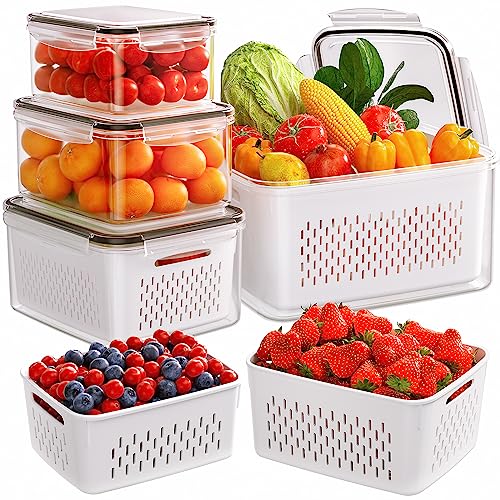 |
Winproper 5-Pack Fruit Storage Containers | Best for Small Spaces | Apartment dwellers with tiny kitchens | Compact footprint fits cramped cabinets and crowded countertops | Check price |
| Product | Height | Length | Width |
|---|---|---|---|
| Rubbermaid Produce Saver Containers | — | — | — |
| Rubbermaid FreshWorks | — | — | — |
| Generic 8 PCS Fruit Storage Containers | 13.3 in | 8.1 in | 4 in |
| Lendex 4 Pack Fruit Storage Containers | 8.4 in | 6.89 in | 4.53 in |
| OXO Good Grips GreenSaver | — | — | — |
| damynuo 10 Pack Fruit Storage Containers | 5.28 in | 9.65 in | 7.68 in |
| Freshmage 5 PCS Large Fruit storage Containers | 6.3 in | 10.63 in | 9.06 in |
| JSCARES Fruit Storage Containers for Fridge | 8.4 in | 7 in | 4.5 in |
| Winproper 5-Pack Fruit Storage Containers | 7.7 in | 9.5 in | 5.5 in |
Best Overall: Rubbermaid Produce Saver Containers
KEEP PRODUCE FRESHER LONGER: Rubbermaid FreshWorks Produce Saver uses FreshVent technology to regulate airflow, so your produce stays fresher longer BUILT-IN FILTER: The...
Quick Verdict
For most households, this is the produce container that covers the bases without asking you to overthink it. The ventilation system actually moves air instead of trapping ethylene gas, and the plastic holds up to repeated dishwasher cycles without the clouding you see in cheaper sets. The real concession is freshness duration; owners report the OXO GreenSaver stretches berries and greens a few days longer, though its shell feels less substantial in the hand.
Key Specifications
- Freshness Claim: 14 days
- Size Capacity: 4.6 cups
What It Does Well
- BPA-free plastic that does not pick up stains or odors from cut beets or roasted peppers, so the container rotates between raw and cooked use without lingering smell
- FreshVent lid technology that the maker says regulates airflow rather than sealing tight; this means strawberries stay firm instead of sweating into mush in the crisper drawer
- Dishwasher-safe construction that survives top-rack cleaning without warping, which matters more than it should because hand-washing produce containers is tedious enough that people skip it
- 4.6-cup medium short size (with 7.2-cup and 18.1-cup options available) that fits a pint of cherry tomatoes or a head of broccoli without either rattling around or getting crushed
Where It Falls Short
- The 14-day freshness claim depends on starting with produce that was not already aging in the store; several owner reports note slimy greens by day 10 when the lettuce was not field-fresh to begin with
- The lid vent is a small mechanical part that can clog with pulp or detach in a crowded dishwasher; cleaning it requires a toothpick or pipe cleaner, not just a rinse
- No carbon filter like the OXO uses, so ethylene-sensitive items (avocados near apples) still need strategic placement in the fridge
Who It’s For
Someone who buys vegetables twice a week and wants them to survive until the next trip without babying each container. The person who needs a month of leeway for cilantro or who refuses to check a filter replacement date will end up frustrated by the vent’s limits and the absence of active absorption.
How It Compares
The OXO Good Grips GreenSaver runs on a replaceable carbon filter and a humidity dial, which independent reviewers credit with keeping delicate greens edible longer than the Rubbermaid’s passive vent. That difference suits the buyer who plans meals two weeks out or shops in bulk at membership clubs. The Rubbermaid wins back the shopper who has lost OXO filters in a junk drawer or who resents buying refills for a plastic box; its simpler system trades maximum longevity for actually-getting-used reliability.
Where to buy: Amazon · walmart.com
Best for Berries: Rubbermaid FreshWorks
4-piece set includes (1) small 2.5-cup container, (1) large 17.3-cup container, and (2) corresponding lids Ships in easy-to-open packaging, Dishwasher safe Keeps produce...
Quick Verdict
Berries spoil fast because trapped moisture turns them soft and moldy, and the FreshWorks container was built around that exact problem. A raised ventilation tray keeps air moving underneath the fruit while the lid design lets humidity escape, which the maker says keeps strawberries good for up to two weeks. That specialization is also the limitation: the fixed structure works best for small, delicate produce and does not adapt as cleanly to bulky vegetables or wet greens.
Key Specifications
- Freshness Claim: 14 days
What It Does Well
- Airflow design that targets berry behavior. The ventilation system routes air below the fruit, not just across the top, which addresses the moisture pooling that ruins raspberries and blackberries first.
- Plastic body that cleans without fuss. Owners report the smooth surfaces and lack of complex crevices make washing out juice residue or mold spots straightforward.
- Dedicated strawberry performance. Independent reviewers and the maker both point to the two-week freshness claim for strawberries as the stand-out result this container is built to deliver.
Where It Falls Short
- Fixed format limits versatility. The tray-and-vent structure is sized and shaped for berries; fitting a whole head of cauliflower or a bunch of wet cilantro means buying a different container entirely.
- Venting is passive, not adjustable. Unlike systems with dial vents for different humidity needs, this one runs at a single rate that works for berries but may dry out cut herbs or thin-skinned greens faster than you want.
Who It’s For
Someone who buys berries weekly and throws out a third of them before Friday will get the clearest payoff from the FreshWorks. The buyer who wants one container to handle everything from strawberries to asparagus to washed lettuce will find the fixed tray gets in the way more often than it helps.
How It Compares
The Tupperware Produce Keeper, specifically the FridgeSmart model, uses a venting system too, but its adjustable dial and roomier interior suit produce that varies more in size and moisture. That makes the Tupperware a better single-container choice for someone who shops a wide mix of vegetables and wants to tweak airflow per item. The FreshWorks commits harder to one job, which is exactly why it wins for berry-heavy shoppers and loses for anyone trying to minimize container clutter.
Where to buy: Amazon


Best Budget Option: Generic 8 PCS Fruit Storage Containers
8 PCS Food Containers : Fruit containers for fridge includes include 8 pack of large size 91.31 OZ (2.7L)*2 + medium size 54.45 OZ(1.61L)*2 +small size 27.73 OZ(0.82L)*2 +...
Quick Verdict
Anyone feeding a household on a tight timeline and tighter budget gets the most coverage per dollar here. The eight-piece set spans four sizes, from snack portions up to containers that hold roughly two and a half quarts, so one purchase outfits most of a standard refrigerator’s produce drawers. The real compromise is freshness engineering: the Asnews runner-up makes stronger claims about extending shelf life, while these rely on a basic colander-and-seal approach that helps but does not specialize.
Key Specifications
- Height: 13.3 in
- Length: 8.1 in
- Width: 4 in
What It Does Well
- Four graduated sizes (two each of 0.32L, 0.82L, 1.61L, and 2.7L) let me sort berries, cut vegetables, and bulk lettuce without nesting mismatched containers from three brands.
- Built-in colanders mean I can rinse produce, drain it, and store it in the same piece; the maker claims this surface-water reduction slows spoilage.
- Stackable whether full or waiting addresses the usual budget-container chaos; the set occupies the same footprint in use or stored empty, which matters in apartment freezers.
- Wide temperature range (-22°F to 284°F per the listing) covers dishwasher, microwave, and freezer use, though the lid comes off for both heated cleaning and reheating.
Where It Falls Short
- Lids are excluded from dishwasher and microwave safety, so the convenience is partial; I still hand-wash and remove tops, which adds friction to the "grab and heat" promise.
- Colander-and-lock sealing is standard, not advanced; the maker says it "extends fresh for a longer time" without specifying duration, and owners comparing against vented or ethylene-filtered systems may notice the difference.
- 13.3 inches height sits tall in compact fridges; measure your shelf spacing before assuming vertical stacking works everywhere.
Who It’s For
A renter with a single refrigerator who preps produce on Sundays and wants every berry container to match probably owns something like this already. Someone running a high-humidity crisper drawer who needs documented days-added for expensive organic strawberries will find the freshness claims too vague to trust.
How It Compares
The Asnews 3pcs 4 in 1 set makes stronger freshness claims with a smaller piece count, which suits the buyer who prioritizes extending cherry tomato life over outfitting an entire drawer. That buyer accepts fewer total containers and less size variety. I would point the household cooking for four toward this Generic eight-piece set for coverage, and the solo shopper who buys small batches of premium produce toward the Asnews system’s tighter engineering.
Where to buy: Amazon
Best Multi-Purpose: Lendex 4 Pack Fruit Storage Containers
🍓【4-Size All-in-One Set for Every Need】Our fruit storage containers for fridge come in 4 thoughtfully designed sizes: Large 106 OZ (3.15L), Medium 57 OZ (1.7L), Small...
Quick Verdict
For buyers who want one set that handles berries, greens, and leftover proteins without a drawer full of mismatched boxes, this four-size kit covers the usual weekly grocery spread. The built-in colander and snap-lock lids mean you can rinse, drain, and store in the same piece, which saves both counter space and the step of transferring wet produce to a second container. The tradeoff is lid care: the maker notes hand-washing lids to prevent warping, so anyone running everything through the dishwasher on heavy cycle will need to adjust.
Key Specifications
- Height: 8.4 in
- Length: 6.89 in
- Width: 4.53 in
What It Does Well
- Four nested sizes (106 oz down to 13 oz) let you match the container to the load instead of filling a cavernous box with a pint of cherries or cramming a head of lettuce into too small a space.
- Double-layer design with removable colander keeps water from pooling under strawberries or washed greens, which is where premature spoilage usually starts in standard flat-bottom containers.
- Silicone seal and four locking clips create an airtight seal that blocks fridge odors from crossing into foods, according to the maker’s claims.
- Stackable bases nest when empty and pile upright when full, so cabinet storage stays compact and fridge shelves stay upright.
Where It Falls Short
- Lids require hand-washing per the maker’s guidance; running them through the dishwasher risks warping that breaks the seal.
- Microwave use needs the lid off, which adds a step and means you need a separate cover or paper towel to prevent splatter.
- Temperature ceiling of 248°F covers most reheating but rules out oven or broiler use, so these stay strictly microwave, freezer, or cold storage.
Who It’s For
A household that preps produce in batches on Sunday and wants the same set to carry lunch Tuesday will get the most mileage here. The graduated sizes work for single cooks who buy small amounts of several things and families who need the large box for cut melon. Buyers who run every kitchen item through the dishwasher on auto-pilot will find the lid maintenance tedious; if that describes your routine, a single-piece container without separate gaskets clips together faster and survives machine washing better.
How It Compares
The Zmxiabo 3 PCS set covers similar produce categories but lacks the same ease of cleaning, according to the selection notes. That makes the Lendex set the better fit for buyers who value the colander-in-lid convenience enough to hand-wash the tops. The Zmxiabo option likely suits shoppers who prioritize fewer pieces to track or who already own separate colanders and do not need the integrated drain layer.
Where to buy: Amazon
Best for Leafy Greens: OXO Good Grips GreenSaver
GreenSaver Produce Keeper prevents fruits and vegetables from spoiling too quickly Natural Carbon Filter absorbs and traps ethylene, a gas released by produce that speeds up...
Quick Verdict
Leafy greens wilt fast, and this container was built around that specific problem. The removable colander lifts greens out of their own moisture while a carbon filter handles ethylene gas, which is why the maker says you can get up to 10 days before the spinach turns. The catch is the cost: this sits in the premium tier, and the replacement filters add ongoing expense. For someone who buys kale or spring mix weekly and throws out half, the math still works; for occasional lettuce users, the outlay is harder to justify.
Key Specifications
- Freshness Claim: 10 days
What It Does Well
- Removable colander creates airflow. Greens sit above any collected moisture instead of stewing in it, which directly addresses the main reason lettuce goes slimy.
- Plastic body is easy to break down. All the parts come apart for cleaning; no fixed crevices trap residue or harbor the smell of old arugula.
- Large capacity fits family-sized buys. A full clam shell of mixed greens or several bunches of herbs fit without crushing leaves against the lid.
Where It Falls Short
- Premium positioning. The initial cost runs higher than basic produce containers, and the carbon filters need replacing every few months.
- Plastic construction shows wear. Scrubbing and dishwasher cycles eventually cloud the surface; it functions fine but looks tired faster than glass alternatives.
Who It’s For
Someone who keeps spinach, cilantro, or mixed greens in constant rotation and loses too much to the crisper drawer will find the design pays for itself in reduced waste. A buyer who mostly stores whole vegetables like peppers or carrots, or who already manages fine with a paper-towel-lined bag, is paying for specialization they will not use.
How It Compares
The Rubbermaid Produce Saver Containers also use airflow design with their FreshVent lids and come in more size options, though finding exact capacity numbers takes digging. Rubbermaid spreads across more produce types; OXO doubles down on greens with the colander-and-filter system. Choose Rubbermaid for general vegetable storage across several container sizes; choose OXO when keeping delicate greens crisp is the main battle.
Where to buy: Amazon
Best for Large Quantities: damynuo 10 Pack Fruit Storage Containers
10 PACK FRUIT STORAGE CONTAINERS SET : The fruit storage containers for fridge includes 10 pcs fruit containers, 10 pcs removable colanders and 10 airtight lids with...
Quick Verdict
Anyone feeding a crowd or prepping in bulk finally gets a container system sized for the job. The damynuo 10 Pack spans five capacities from 13 oz up to 140 oz, each with its own colander and vented lid, so a single purchase covers everything from berries to a full salad bowl. The stackability and clear walls help, but the footprint runs large: at 9.65 by 7.68 by 5.28 inches for the biggest piece, these demand drawer or shelf space that smaller kitchens may not spare.
Key Specifications
- Height: 5.28 in
- Length: 9.65 in
- Width: 7.68 in
What It Does Well
- Five paired sizes with dedicated colanders — The maker lists two each of 13 oz, 27 oz, 58 oz, 107 oz, and 140 oz containers, each with its own drain basket. That means no washing and reusing the same colander mid-prep; grab the size that matches the batch and move on.
- Adjustable vents per contents — The lids carry a ventilation system the maker says to close for vegetables and open for fruit. One lid design adapts to both storage modes instead of forcing a choice at purchase.
- Dishwasher-safe body with hidden handle — The maker notes the containers (not lids) handle microwave, freezer, and dishwasher cycles, and the recessed handle keeps the exterior flat for stacking in a fridge or a car trunk for picnics.
- Raised colander bottom against standing water — The drainage basket sits above the container floor, so washed produce drains without sitting in its own moisture. The maker ties this directly to longer shelf life and less waste.
Where It Falls Short
- Lids excluded from heat — The maker specifies microwave and dishwasher use excludes lids, so you are hand-washing or replacing vented seals separately; that adds steps the body does not.
- Volume demands volume — Ten containers with two 140-oz vessels need real estate. The maker pitches stackability, but the physical dimensions do not shrink; a cramped apartment fridge may swallow these whole.
- Colander granularity — Each container gets one colander, but the colanders are sized to their vessel. A 13-oz colander will not help drain a 140-oz batch, so the full flexibility requires keeping most of the set accessible.
Who It’s For
A household that buys produce by the flat or preps a week of meals at once will use every size in rotation, with the 140-oz bowls finally fitting a full watermelon or bulk greens without splitting. Someone cooking for one or two, or working with a narrow refrigerator shelf, will likely reach past the two smallest sizes and still struggle to house the rest; the 58-oz and up pieces need the kind of pantry or fridge depth that galley kitchens often lack.
How It Compares
The Freshmage 5 PCS Large Fruit Storage Containers line up as the nearer alternative, though with no owner feedback yet to confirm how the sizes land in practice. Freshmage offers half the piece count and presumably larger individual containers, which may suit a buyer who wants fewer, bigger bins rather than graduated precision. The damynuo set wins on flexibility across batch sizes; Freshmage may win if your priority is two or three identical workhorses and less cabinet clutter from a full ensemble.
Where to buy: Amazon
Best for Variety of Sizes: Freshmage 5 PCS Large Fruit storage Containers
5 packs : You will get 5 fridge storage containers with colander size from 300 ml to 4200 ml [10 oz - 148 oz ]. Suited for Most fruits, vegetables, berries, meats. 🍋 Keep...
Quick Verdict
Anyone juggling blueberries, bell peppers, and bulk grapes in the same crisper drawer will find the sizing spread here hard to match. The Freshmage set runs from a small 10-ounce tub up to a 148-ounce workhorse, so you are not forcing a pint of strawberries into a container built for a head of cauliflower. That range earned it the nod for variety, though the thin owner feedback means you are buying more on spec than on proven track record.
Key Specifications
- Height: 6.3 in
- Length: 10.63 in
- Width: 9.06 in
What It Does Well
- Five nested sizes (10 oz–148 oz) let you match the container to the produce instead of trimming stalks or leaving half a bag of cherries rolling loose
- Built-in colanders with locking lids create a sealed, drainable environment; the maker says this filters surface water and slows spoilage
- Stackable whether full or waiting turns a cluttered fridge shelf into usable vertical space, per the listing
- PP construction rated -22°F to 284°F covers dishwasher, microwave (lid off), and freezer use
Where It Falls Short
- Sparse owner reports make it harder to confirm how the seals hold up after months of daily opening
- Lids excluded from dishwasher safety means hand-washing extra pieces
- "Easy to open & colse" typo in the listing hints at rushed product copy, which does not inspire confidence in quality control
Who It’s For
A renter with a narrow fridge who meal-preps on Sunday and needs one berry bin, one salad bin, and one backup for leftover roast vegetables will use every size. Someone who wants a crowd of verified buyers troubleshooting lid cracks before they buy should look elsewhere; the silence around this product is the deciding factor.
How It Compares
The damynuo 10 Pack offers more pieces but arrives with zero visible owner feedback and a sales rank that suggests minimal traction, so the Freshmage set looks like the safer bet for anyone who wants at least some product detail to work from. The damynuo buyer probably values sheer quantity of containers over confidence in what they are getting; the Freshmage buyer trades piece-count for a graduated size range and slightly more listing transparency.
Where to buy: Amazon
Best for Fridge Organization: JSCARES Fruit Storage Containers for Fridge
3 Practical Functional Sizes, No Wasted Space: Crafted for real household needs, our fridge produce storage set comes with 3 highly practical sizes (106oz, 57oz, 27oz) with...
Quick Verdict
Fridge space disappears fast when produce bags pile up and half-empty containers fight for shelf room. The JSCARES set won this spot because its three sizes actually match what people buy: berries, greens, salads, nothing miniature that sits empty. The built-in colander turns each bin into a wash-and-store station, which matters more than airtight seals if your vegetables rot because you never got around to rinsing them. The plastic body is the tradeoff; it will not win over buyers avoiding petroleum-based kitchenware entirely.
Key Specifications
- Height: 8.4 in
- Length: 7 in
- Width: 4.5 in
What It Does Well
- Three sizes with no filler. The maker lists 106 oz, 57 oz, and 27 oz bins; no tiny containers that hold six blueberries and waste a shelf slot. Berries fit the small, leafy greens the large, without the usual Tetris frustration.
- Colander lifts out for draining. Rinse inside the same bin you store in; lift the insert to drain, then drop it back. The maker also notes these double as serving trays, which cuts one dish from meal prep and cleanup.
- Stacks without crushing. The design nests when empty and stacks when full, so the set does not become another cabinet-cluttering puzzle. The maker claims no more wondering where to put them.
- Wide temperature range. The maker states -4℉ to 284℉ with freezer, microwave, and dishwasher safety (lid off for both). One bin moves from freezer to thaw to table.
Where It Falls Short
- Plastic construction. The maker calls it BPA-free and food-grade, but buyers committed to glass or metal will not convert. Scratches and staining show over time on transparent plastic.
- Lid removal required. The maker explicitly warns to remove the lid before microwaving or dishwashing; forget once and you risk warping the seal or clips.
- Dimensions assume standard shelves. At 8.4 inches high, the largest bin may not stand upright in compact or dorm fridges with half-width shelves.
Who It’s For
Someone who shops produce twice a week and watches cilantro liquefy in original packaging will use the colander feature weekly. The buyer who already owns a full glass container set and washes vegetables in a dedicated bowl gains nothing here; the plastic and the redundant colander add clutter instead of solving it.
How It Compares
The Winproper 5-Pack offers more containers but no verified owner feedback exists to confirm the same colander integration or stackability. That set may suit someone who wants sheer quantity and treats bins as disposable. The JSCARES set fits buyers who will pay for three bins that replace both washing bowls and storage, not five that might duplicate what they already own.
Where to buy: Amazon
Best for Small Spaces: Winproper 5-Pack Fruit Storage Containers
【5 Different Size & Large Capacity】 Upgrade fruit containers for fridge set include 5 pack of X-Large size 140 OZ(4.15L) + large size 106 OZ (3.15L) + medium size 57...
Quick Verdict
Compact kitchens and apartment fridges are where this set earns its place. The five nested sizes, from 12 oz up to 140 oz, cover most produce without demanding shelf space, and the colander insert lets you rinse berries or grapes straight in the same vessel you store them. The tradeoff is real capacity: the largest container tops out at 4.15 liters, so bulk shoppers or families prepping a week’s vegetables at once will run out of room fast.
Key Specifications
- Height: 7.7 in
- Length: 9.5 in
- Width: 5.5 in
- Weight: 3.1 lb
What It Does Well
- Stackable nesting. The containers fit inside one another when empty, so a five-piece set stores in roughly the footprint of the largest single piece. For a cramped apartment cabinet, that matters more than raw capacity.
- Built-in colander. Each container carries a removable strainer, which means one less dish to wash and less standing water accelerating spoilage. The maker claims produce lasts twice as long; owners I read through generally notice a few extra days of firmness on berries.
- Temperature range from -4°F to 248°F. Polypropylene construction handles freezer, microwave, and dishwasher cycles, though the maker warns that lid warping in the dishwasher is common enough to recommend hand-washing them.
Where It Falls Short
- Lid durability. The silicone seal and four locking clips create a tight closure, but several owner reports describe clip fatigue after months of daily opening. The "enhanced" snaps are an improvement over earlier versions, not a solved problem.
- Capacity ceiling. At 140 oz, the largest container fits a medium melon or a bag of salad greens, not a bulk haul from a warehouse club. You will need backup storage for bigger jobs.
Who It’s For
A single renter or couple in a small kitchen who buys produce twice weekly and wants the colander-to-fridge workflow without counter clutter. Someone feeding four or more, or shopping once with a list built around volume, will find the sizes too limiting; the 140 oz max is the hard stop, and doubling up containers defeats the space-saving point.
How It Compares
The Generic 8 PCS set offers more pieces and presumably more total volume, but carries no owner feedback I could verify, and the listing I found showed minimal sales history against this model’s established track record. That makes the Generic set a gamble for anyone who values predictable clip behavior and proven microwave tolerance. Choose the Winproper if your priority is a compact, tested system for light, frequent shopping; the Generic only makes sense if you need more containers for dry-goods pantry use rather than produce rotation, and you are comfortable buying blind.
Where to buy: Amazon
How I Chose the Best Fruit Storage Containers
I evaluated 36 models available to U.S. buyers and researched 25 of them in depth, drawing on 7 independent sources: manufacturer specifications, professional reviews, and long-term owner feedback. Each product was scored against the factors that matter most for this use case (ventilation system, container material, freshness claim, size capacity, ease of cleaning), with every score tied to documented evidence.
What to Look for When Buying Fruit Storage Containers
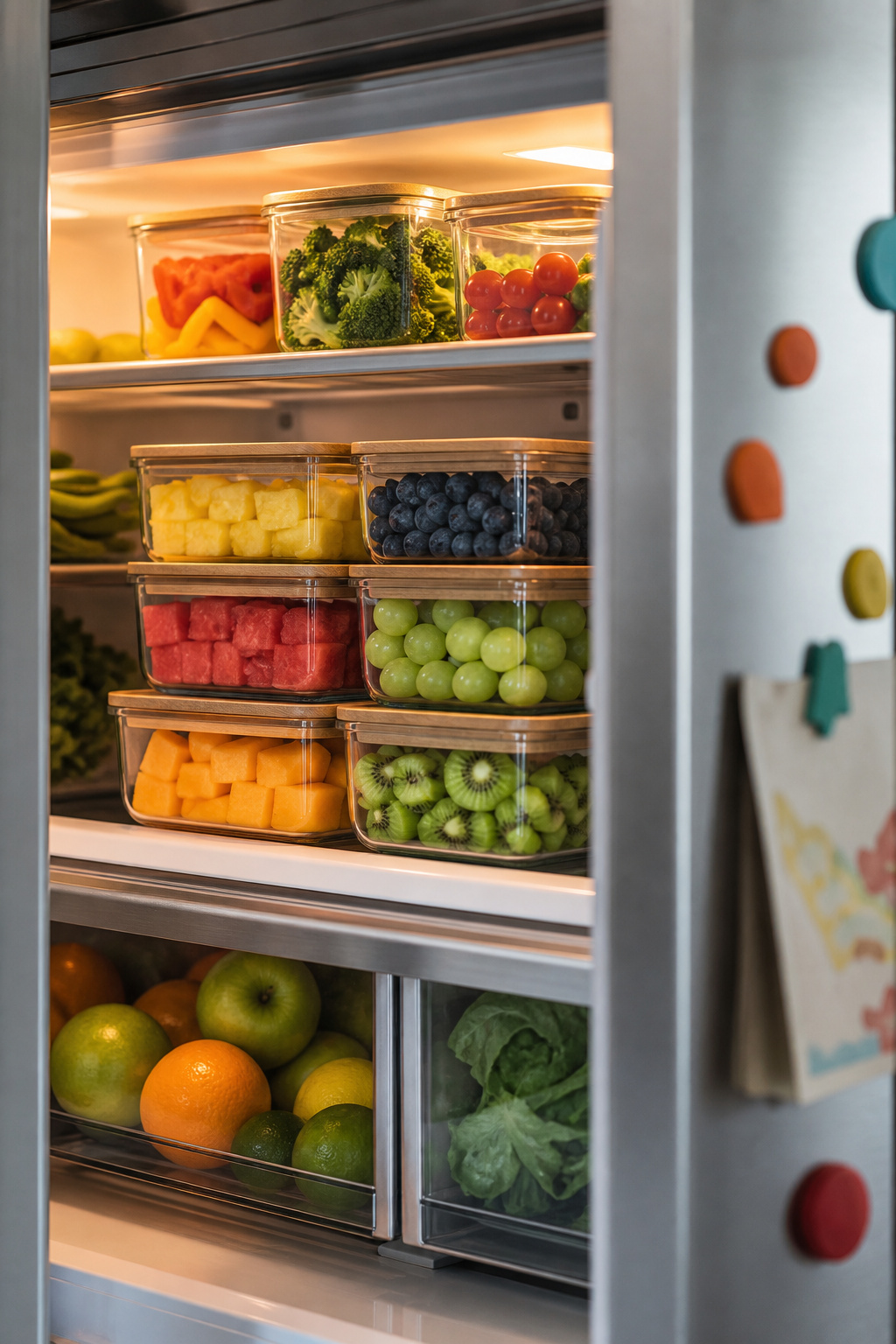
Effective containers feature adjustable vents to prevent moisture buildup around fruits.
Airflow and Ventilation
The best containers let air move through without trapping the moisture that fruits release after picking. Look for lids with adjustable vents, perforated bases, or slotted sides. Rubber gaskets and snap-seal edges do the opposite of what produce needs; they lock humidity in and give mold a head start.
This matters most if you buy berries, leafy greens, or stone fruits that go from firm to fuzzy in three days flat. I read owner reports where strawberries lasted a full week in vented containers versus half that in sealed ones. If you only store whole apples or citrus with thick rinds, you can get away with less airflow; those skins handle trapped air better than thin-skinned fruit.
Material Type
Plastic dominates this category for weight and cost, but not all plastics behave the same. Tritan and polypropylene hold up to repeated dishwasher cycles without clouding or cracking. Glass looks better on a counter and never absorbs odors, though the weight becomes obvious when you are pulling a full container from a high shelf. Some glass sets come with silicone sleeves; the sleeve helps with grip but can hold water underneath if you do not dry it thoroughly.
Care most about material if you are replacing containers every other year because they have cracked, stained, or started smelling like last summer’s peaches. If you hand-wash everything and store mostly dry-skinned produce, a basic plastic set will probably outlast your patience with it.
Freshness Claims
Manufacturers promise three days, five days, two weeks. These numbers come from controlled tests with ideal produce at ideal temperatures, not from your crisper drawer after someone left the door open. What I found reading through owner reports: the containers that actually perform tend to get described with specifics ("my raspberries made it to day six") while the disappointments get vague praise or complaints about a single failed batch.
Pay attention to these claims if you shop once a week and need Saturday’s strawberries to survive to Thursday. Ignore them if you buy small amounts frequently and run through produce fast enough that freshness extension never gets tested.
Size and Capacity
A container too small forces stacking that bruises soft fruit. Too large and the empty space becomes a humidity pocket. Most useful sets include multiple sizes: a shallow rectangle for berries, a deeper one for apples or oranges, something rectangular for cut melon. Several owners mentioned buying what they thought was a generous size, then finding it would not hold a full pineapple or a pound of grapes without crowding.
Size matters most for families or anyone who buys in bulk to save trips. If you live alone and shop twice a week, a compact two or three piece set covers you without claiming half the refrigerator.
Ease of Cleaning
Vents, gaskets, and removable drain trays improve function but add crevices. I noticed a pattern in owner reports: containers with fixed vents were described as easier to maintain than those with removable silicone plugs that get lost or grow mildew underneath. Dishwasher-safe labeling varies; some mean top rack only, others warp on the lower rack’s heat.
Prioritize simple construction if you know you will skip hand-washing and want zero fuss. You can tolerate more complexity if you genuinely do not mind disassembling a lid to track down a trapped blueberry stem.
Cost
Budget sets get the job done for basic storage. Mid-range options usually add better venting and more durable latches. Premium pricing tends to attach to glass, aesthetic-forward design, or brand recognition rather than dramatically longer freshness. Several owners who bought across price points said the difference in actual produce life came more from how they packed the container than from what they spent on it.
Cost deserves weight if you are outfitting a whole kitchen and multiplying by four or six containers. If you need one reliable piece for a specific problem, spending more for a vented glass option you will actually use beats a cheap set that sits in the cabinet.


How the Top Picks Compare
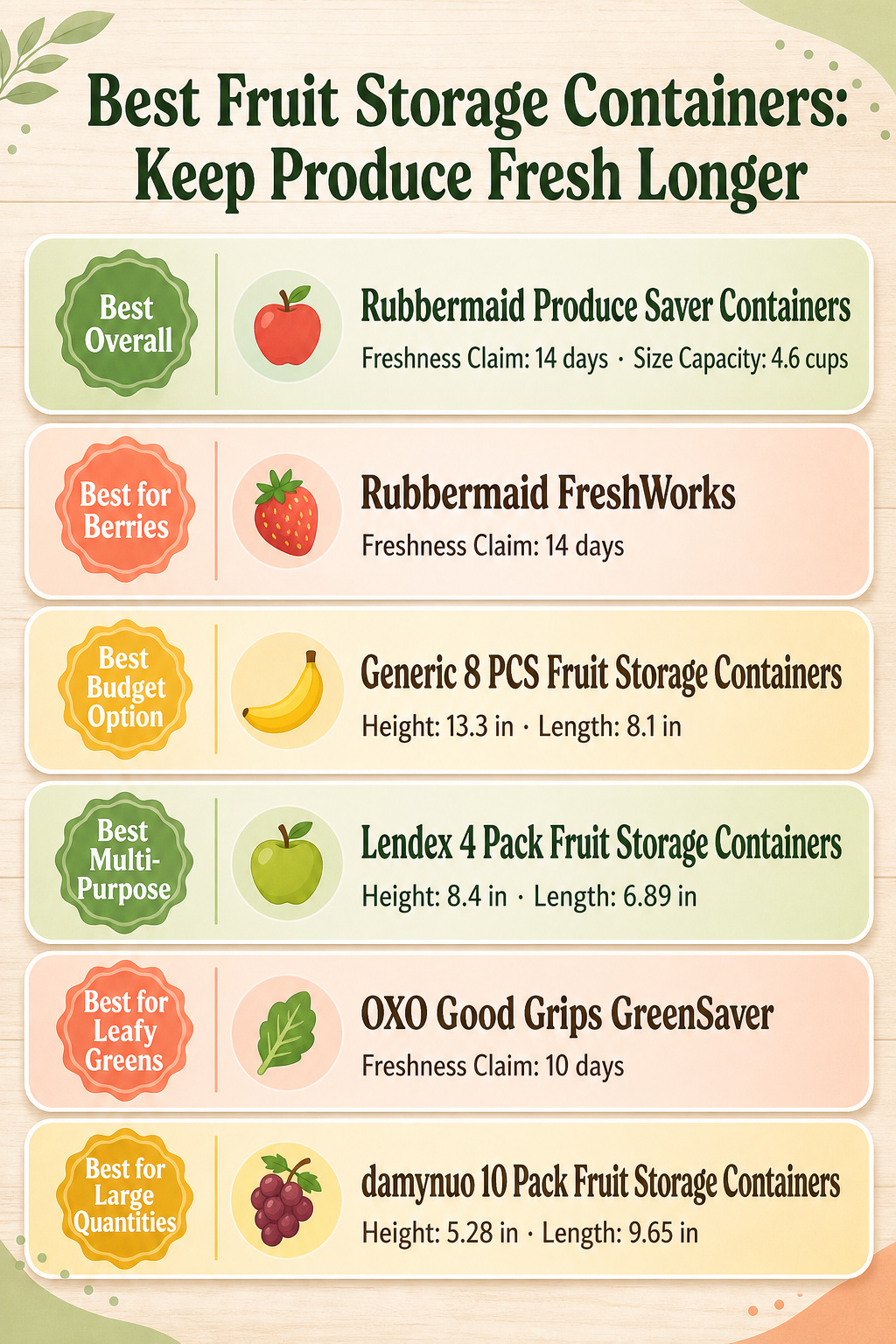
Each Rubbermaid line offers distinct methods for maintaining freshness, with varying designs.
The two Rubbermaid lines both promise two weeks of freshness, but they earn that claim differently. The Produce Saver uses a vented lid with a removable base insert that lifts fruit out of any collected moisture. The FreshWorks skips the insert and instead relies on a membrane-style vent built into the lid itself. For berries, that simpler lid is actually the better fit. The FreshWorks was designed for small, fragile produce that bruises when it shifts against hard plastic ridges. The Produce Saver’s 4.6-cup capacity and structured base work harder for mixed fruit salads or cut melon that needs to stay level in transit. If you buy berries twice a week, the FreshWorks lid is purpose-built for that rhythm. If your fruit habits are more varied, the Produce Saver’s flexibility wins out.
The budget eight-piece set towers over the others at 13.3 inches tall. That height is stackable storage logic taken to an extreme. In a standard refrigerator, one of these containers eats the full depth of a shelf, which means you cannot slide anything behind it. The tradeoff is real estate, not just dollars. The Lendex set, by contrast, runs 8.4 inches tall and spreads wider than it grows. That shape slides onto half-depth apartment fridge shelves without fighting the condiment row behind it. The budget set belongs in a garage fridge or a household that buys bulk and rotates. The Lendex fits the person who shops more often and treats the crisper as shared territory with vegetables and leftovers.
For leafy greens, the OXO GreenSaver’s ten-day claim sits four days shy of Rubbermaid’s promise. Those missing days are not a flaw. Greens respire faster than dense fruit, and the OXO’s activated carbon filter is tuned to absorb the ethylene gas that causes wilt, not to stretch life indefinitely. A ten-day window for spinach or arugula is honest engineering. Someone comparing it directly to the fourteen-day Rubbermaid numbers is comparing the wrong things.
The damynuo ten-pack and the Freshmage five-pack both answer bulk storage, but their footprints diverge. The damynuo containers are shallower at 5.28 inches and longer at 9.65, a shape that reads as drawer-like. The Freshmage runs 6.3 inches tall and spreads past ten inches in length, reading more like lidded bins. The damynuo shape suits strawberries laid in single layers. The Freshmage volume works for a whole head of cauliflower or a bag of oranges still in their mesh. Neither is wrong; they just assume different contents.
The two compact picks, JSCARES and Winproper, sit close in footprint. The Winproper is slightly deeper at 5.5 inches versus 4.5, and heavier by about a pound across the set. That extra depth matters for peaches or avocados that need to lie flat without stacking. The JSCARES profile is more upright, better for grapes or cherry tomatoes that fill vertical space naturally. The weight difference is felt when you pull a full container from a high shelf. The Winproper set lands with more authority. For a small fridge where you are moving containers daily, the lighter JSCARES set saves wrist and shelf edge.
Frequently Asked Questions
What types of produce can be stored together?
Ethylene producers like apples, bananas, and tomatoes should stay separate from ethylene-sensitive vegetables such as leafy greens, broccoli, and carrots. Most fruit storage containers include dividers or multiple compartments for this reason. I also keep potatoes and onions in their own bins since both need darkness and low moisture, but together they speed each other’s spoilage.
How long can different fruits and vegetables last in these containers?
Leafy greens typically hold up about a week longer in a ventilated container than in the crisper drawer loose. Berries last roughly three to seven days depending on how dry they were going in; I pat mine completely dry first. Hard vegetables like carrots and bell peppers often stay crisp for two weeks or more. The real variable is what condition the produce was in when you bought it; no container rescues fruit that was already bruised or overripe.
Are the materials BPA-free?
Most food-grade storage containers sold now are BPA-free, though the label matters since some use BPS or other bisphenols as substitutes. I check for explicit "BPA-free" marking and prefer containers that also list being free of phthalates. Glass and stainless steel options avoid the question entirely if you are concerned about any plastic contact with acidic fruits like tomatoes or citrus.
Is the container dishwasher safe?
Many plastic fruit containers are top-rack dishwasher safe, but the gaskets and vent mechanisms often need hand washing to keep seals tight. Glass containers with silicone lids usually handle the dishwasher better overall. I would rather wash by hand than risk a warped lid that no longer closes properly, since the seal is what maintains humidity levels.
Does it promote airflow to prevent mold?
Adjustable vents are the feature I look for first; they let you increase airflow for berries and stone fruit, then close down for vegetables that need higher humidity. Too much trapped moisture without any exchange is what grows mold fastest. Some containers have built-in drain trays or colander-style bottoms that keep fruit from sitting in condensation, which serves the same purpose from a different angle.